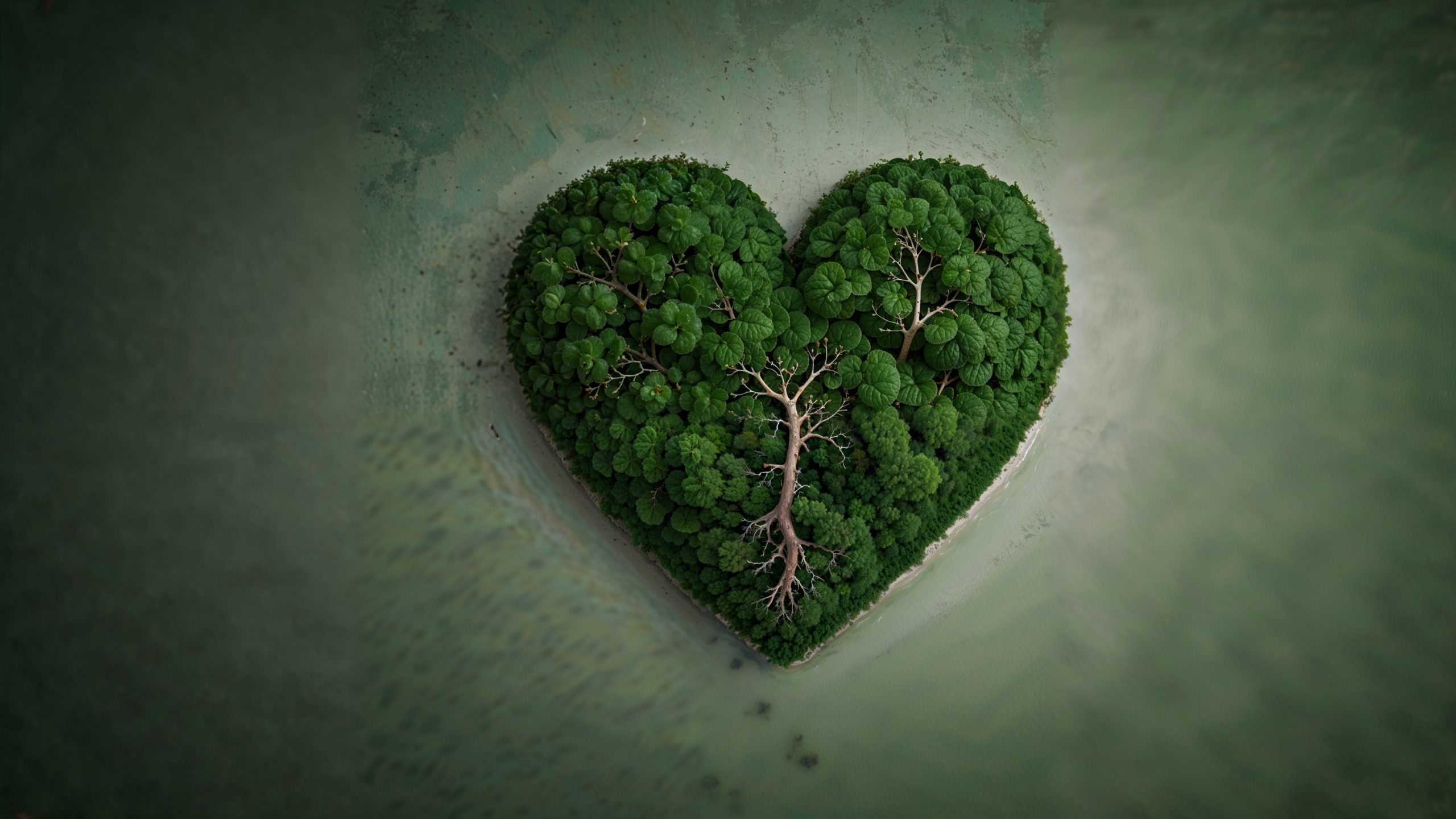
The Liver–Heart Relationship
How Anger and Love Flow Through the Same Pathway
The Connection Between the Liver and Heart
In Traditional Chinese Medicine and Daoist medicine, the Liver and Heart are closely connected. The Liver belongs to the Wood element, and the Heart belongs to Fire. Wood nourishes Fire, meaning the movement of Liver Qi always influences the Heart’s emotional state.
The Liver’s role is to move Qi upward and outward. It gives direction, movement, initiative, vision, and emotional flow. The Heart receives this movement and transforms it into warmth, presence, clarity, and connection.
When the Liver moves freely, the Heart stays steady. When the Liver becomes obstructed or tense, the Heart becomes unstable. This explains why emotions arising from the Liver, such as frustration or anger, often manifest in the Heart as agitation, chest pressure, racing thoughts, emotional overflow, or sudden tears.
Many people think their “heart is broken,” but often the deeper issue begins in the Liver, where unexpressed anger, resentment, or disappointment disrupts the natural flow. When Wood cannot rise freely, Fire cannot shine steadily.
When the Liver is blocked, the Heart cannot function properly.
The Liver holds unprocessed anger, old disappointments, and emotional tension. When this tension rises toward the Heart, it disrupts the Heart’s natural state.
Instead of warmth, there is pressure. Instead of love, there is irritation. Instead of clarity, there is restlessness. Instead of connection, there is withdrawal.
The Heart tries to express itself, but the blocked Liver energy distorts the message.
This explains why someone can love deeply yet react with anger, or quickly alternate between seeking closeness and creating distance. The Heart is not the issue; rather, the obstruction in the flow from the Liver is the cause.
When the Liver is healthy, the Heart naturally opens
When Liver energy flows freely, the chest relaxes, and the Heart shines brightly. Attention and emotions become stable, allowing us to feel warmth without confusion, express love without tension, and transform anger into direction, courage, and honesty.
In my healing sessions, I often observe this process when the green energy of the Liver rises smoothly and connects with the red light of the Heart. Clients experience relief in their chest, gain a clearer mind, and suddenly regain the ability to feel warmth.
Anger and Love: Two Sides of the Same Energy
Anger and love share a common origin. Both emotions arise from the same inner force that seeks connection. When this movement is smooth and safe, it manifests as love. However, when it is blocked or threatened, it can transform into anger.
When someone cares deeply, they are more likely to feel anger when they are hurt. Conversely, if someone does not care at all, neither anger nor love is present.
Both emotions indicate a strong inner bond.
Anger and love travel through the same channels in the body. Anger rises from the Liver, while love radiates outward from the Heart. However, anger must pass through the Heart before it can be expressed. This means that the energies of anger and love meet in the same location.
If the pathway is clear, the Heart transforms the rising force into warmth and connection. If the pathway is blocked, that same rising force may manifest as frustration or aggression.
This is why someone in love may easily feel jealous or irritated. When love runs deep, it can lead to deep hurt. A person who suppresses their anger often feels emotionally numb. In contrast, someone who confronts their anger usually discovers a deeper sense of love beneath it.
Anger protects what we cherish.
Anger arises not randomly but when something significant is threatened, whether it’s a value, a boundary, a need, a bond, a relationship, or a feeling of safety. Anger expresses a profound message: “This matters to me.”
When we explore deeper emotions, we often find that anger is layered over feelings such as love, tenderness, vulnerability, longing, the desire to be understood, and the need for safety with others.
The more love we have, the more intense our anger can be when we experience hurt or disconnection.
Anger is Love That Has Lost Its Way.
When the pathway from the Liver to the Heart is blocked, the rising energy cannot transform into warmth nor reach the Heart. Instead, it manifests as heat without direction, which we experience as anger.
When the pathway is clear again, this heat transforms into warmth, intensity into clarity, frustration into truth, hurt into understanding, and contraction into connection.
Anger does not simply disappear. It transforms into a different form. Ultimately, it returns to its original nature: love.
Anger is not a random occurrence; it serves as a signal within our inner system. It indicates where the connection has been interrupted, where direction has been lost, or where old emotions have yet to be processed.
When Feeling Ignored Disturbs the Liver–Heart Pathway
One of the clearest examples of how Liver Qi affects the Heart is what happens when someone feels ignored. When a person speaks, reaches out, or waits for a response, their Qi moves outward. This movement follows the natural direction of Wood — rising, expanding, and seeking connection.
If the other side does not answer, this movement has nowhere to go. The Qi pushes back inward, collecting in the chest and ribs. The person may feel dismissed or unimportant. This blocked movement can create pressure in the chest, tightness in the throat, or a sudden emotional heat rising inside.
The Heart then receives this disturbed energy. Instead of feeling warm and open, it becomes unsettled or hurt. The mind may react with agitation, sadness, or frustration.
This simple daily moment shows how the Liver and Heart communicate. The Liver initiates the outward movement. The Heart receives the emotional meaning of the interaction. When there is a blockage, both organs respond — the Liver with tension, the Heart with emotional pain.
Hannah’s Story
Hannah’s experience shows how deeply the Liver–Heart process can affect a person.
She grew up in a home where her feelings rarely met a response. She tried to speak, but her words often disappeared into silence. When she asked questions, the answers came late or not at all. Over time, she learned to keep her emotions inside because reaching out brought little change.
This shaped her inner world. The natural movement of her Liver Qi tried to rise and express itself, but it had nowhere to go. Each unacknowledged moment pushed the energy back into her chest. The area around her ribs tightened, and the space around her Heart became sensitive and heavy.
As she grew older, this pattern continued. She became careful in how she expressed herself, choosing her words softly and avoiding anything that might create conflict. She did not allow herself to show disappointment or frustration. Instead, she carried a quiet pressure inside, as if her breath never fully reached her lower ribs.
Small daily interactions affected her deeply. A delayed message made her chest tighten. A distracted response left her uneasy. A forgotten promise brought an inner heat that she could not explain.
She rarely showed anger. Most of it stayed inside, forming a silent tension around her diaphragm. Hannah often described feeling “full in the chest but empty in the heart,” a sign that her Liver Qi was blocked and her Heart could not settle.
Hannah’s story reflects how the Liver–Heart pathway influences emotional life. When the Liver cannot complete its outward movement, the Heart receives the disturbed energy. When the Heart cannot express what it receives, the Liver becomes even more constrained. This creates a cycle of tension, sensitivity, and quiet pain that can last for years unless it is brought into awareness and gently released.
Her story shows how a blockage in one organ quickly affects the other.
Balance between the Liver and Heart
This example demonstrates that the Liver and Heart work in tandem. According to the Five Element Nutritional Cycle, energy follows a specific pathway: the Liver provides fuel for the Heart. If there is too much fuel, the Heart can become overstimulated; if there is too little, it can become dim.
In Hannah’s case, the Liver’s energy could not rise, preventing the Heart from receiving a steady supply. The Heart was not damaged; it simply lacked support. When the upward movement from the Liver returned, the Heart began to function normally again.
This explains why the condition of the Heart often reflects the condition of the Liver. When Liver energy rises steadily, the Heart remains warm, stable, and open. If Liver energy rises too strongly, the Heart can become restless and overactive. Conversely, if the Liver cannot rise at all, the Heart may become dull, closed off, or emotionally muted.
The balance between these two organs is crucial for emotional health. A stable and open Heart relies on a clear and healthy Liver.
Understanding how the Liver and Heart interact helps us see why anger can feel overwhelming at times and invisible at others. Anger does not always appear as heat or intensity. Sometimes it slips underground and shows itself as numbness, withdrawal, self-blame, or loss of direction.
Understanding the Cycle Clearly
Hannah’s experience is not unusual. Many people carry similar patterns without realizing that the root begins in the movement of Liver Qi and its relationship with the Heart. When the Liver becomes tense, the Heart feels unstable. When the Heart cannot express itself, the Liver tightens even more.
This cycle is the foundation for many silent emotional patterns described in the following chapters. It shows why anger and emotional pain are never separate events but part of a shared pathway inside the body.